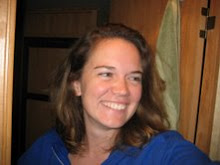
Dear friends,
As most of you know, I’ve been home from Haiti for over a year and a half discerning what will be my next step/adventure/mission in life. I’ve done odd jobs here in Black Mountain and gone on shorter mission trips: to the Open Door Community in Atlanta to visit my sister and join them in their work with the homeless and against the death penalty, to Malawi with Marion Medical Mission to install wells in villages, to the Los Angeles Catholic Worker House to see their ministry with the homeless on Skidrow, and to a conference on social and ecological justice and how they intertwine.
I now have two upcoming trips! In August, I will join a two week delegation to Kenora, Ontario with Christian Peacemaker Teams. CPT is an organization that offers a nonviolent alternative to war and conflict. It provides support to people committed to nonviolence. Delegation members provide encouragement for communities experiencing violence, challenge violations of human rights and promote active nonviolence to settle disputes. Specifically for this delegation, we will see 1) how corporate clear cut logging of Asubpeeschoseewagong traditional territory has destroyed hunting, trapping, food and medicine gathering activities, 2) how Indian Residential Schools have deeply and negatively impacted families and communities in the area, and 3) how mercury contamination discovered over 40 years ago continues to poison residents. We will meet with indigenous and non-indigenous community leaders and residents to explore these issues, with a goal to plan a public witness/nonviolent action to confront these problems.
This delegation trip is the first step in what could be a 3 year long-term volunteer posting with CPT. When I return I plan to apply to the 4 week training program!
My second trip is back to Africa for 3 weeks, again with Marion Medical Mission helping to install more wells. I know from my last experience with them that the long, dusty days are tough but the smiles, dancing, and celebrations wipe all the feelings of exhaustion away when the well gives up clean water for these villagers. Last year, I helped install 73 wells (providing clean water to approximately 10950 people). I look forward to doing it again!
And so, once again, I am asking for your support. Prayers are most important and needed as I can’t do any of this on my own. Financial support is also helpful and appreciated. Here are my estimated expenses:
$ 725 cost for CPT delegation
$ 725 transportation to Kenora, Canada
$2500 transportation to Africa
$ 400 food and housing
$ 250 vaccines, medication, visa
$4600 total
Checks can be made out to Jessi Stitt and sent to:
Jessi Stitt
203 Tomahawk Ave.
Black Mountain, NC 28711
Or online donations can be made to CPT just be sure to put my name on the memo line!
I will update my blog and give presentations when I return from both trips. Any questions or comments are welcome! 828-674-9113 or jessi.stitt@gmail.com
Thanks for your consideration, prayers and support!
Peace, jessi
Wednesday, June 24, 2015

Wednesday, February 11, 2015
Open Door Community
I spent the last two weeks at the Open Door Community in Atlanta, Georgia. The Open Door is an intentional, covenental Christian community that focuses on providing hospitality to those who are homeless, abolishing the death penalty, and other social justice issues. In the house are people off the streets, resident volunteers, local volunteers, men released from prison, and partners who are here for the long haul. Two days a week they host a soup kitchen, welcoming 120 people into their house for a warm meal each day, about 10 women (on Tuesday) and 60 men (on Wednesday) get showers with a clean set of clothes, new (ish) shoes, and whatever other needs they can fill with what has been donated or brought to them.
So I have helped serve in the soup kitchen and helped with the women picking out clothes before their showers. I've cooked dinner for the community and cleaned up after meals and when the days are done. On Tuesday, January 27, at 755pm, Georgia murdered Warren Hill, a man on death row who was mentally disabled. It is illegal in the US to execute the mentally disabled, but his appeal to the Supreme Court was denied. We stood in front of the state capital vigiling in the hopes of a stay of execution or clemency. With words from Open Door leaders and other clergy members, we asked for justice and we read the names of the 50+ people who have been executed in GA since 1976.
On Wednesday we went to the Carter Center to hear Brian Stevenson speak. He is a lawyer who works with people on death row in Alabama as well as children who have been tried as adults and are in prison. He wrote the book Just Mercy and I highly recommend reading it and if you have the chance to hear him speak, do so.
The next week we attended a vigil for Kevin Davis who was shot by a police officer in his house after he had called 911 for help. The officer is back on the streets without an inquery into the matter. The vigil was to ask for the GBI (Georgia Bureau of Investigations) to look into it. Many stayed all night in front of the Dekalb County Courthouse.
It has been a full and beautiful, heartbreaking and eye opening week. Geaorgia has just put an execution date on its only female prisoner on death row, Kelly Gissendaner, for February 25th. Prayers please.
So I have helped serve in the soup kitchen and helped with the women picking out clothes before their showers. I've cooked dinner for the community and cleaned up after meals and when the days are done. On Tuesday, January 27, at 755pm, Georgia murdered Warren Hill, a man on death row who was mentally disabled. It is illegal in the US to execute the mentally disabled, but his appeal to the Supreme Court was denied. We stood in front of the state capital vigiling in the hopes of a stay of execution or clemency. With words from Open Door leaders and other clergy members, we asked for justice and we read the names of the 50+ people who have been executed in GA since 1976.
On Wednesday we went to the Carter Center to hear Brian Stevenson speak. He is a lawyer who works with people on death row in Alabama as well as children who have been tried as adults and are in prison. He wrote the book Just Mercy and I highly recommend reading it and if you have the chance to hear him speak, do so.
The next week we attended a vigil for Kevin Davis who was shot by a police officer in his house after he had called 911 for help. The officer is back on the streets without an inquery into the matter. The vigil was to ask for the GBI (Georgia Bureau of Investigations) to look into it. Many stayed all night in front of the Dekalb County Courthouse.
It has been a full and beautiful, heartbreaking and eye opening week. Geaorgia has just put an execution date on its only female prisoner on death row, Kelly Gissendaner, for February 25th. Prayers please.
Wednesday, November 5, 2014
joys and frustrations
So my actual time with MMM is up (and I'm visiting friends in South Africa) but I still have some more to share about that part of my trip so here goes...
I'm pretty sure that I mentioned that we get a lot of glory for not much work on our parts and that if everything goes as it should the installation takes about 20 minutes. But how often do things go as they should? And there are, of course, many things that can and do go wrong.
Sometimes it is human error...driving down the wrong road to get to the far off village, being late meeting the installation supervisor, misunderstanding of where to meet the supervisor, etc. Sometimes it is a parts problem. There isn't a great quality control here so though we technically had the right parts sometimes they wouldn't fit together. The metal T handles might be too rough and just that much too big to fit into the plastic piece of the pump. The plastic pipes sometimes weren't pre-threaded but then we had a tool for that.
Sometimes it was not our fault. And those were the hard ones. When there wasn't enough water in the well and it needed to be dug deeper. When we would arrive at the village only to find the well not finished or not finished properly. One well we got to had been finished skew. Which meant the pipes and pump weren't straight up and down which made it very hard to use and a set up for disaster and needing repairs. The concrete wasn't very strong either. We installed anyway but had to tell them that the maintence man would come that week to fix it. That was the second time we'd been out there.
Once we got there and our installer dropped the pipe down the well. The well was that much too deep when he was supposed to measure. So then we had to fish it out which they did using 2 pairs of shoe strings. Whenever things went awry, it was very easy to get frustrated with how much time it was taking...every hangup took the time it would take to get to another village to set up a another well. So that would be one less well installed that day and possibly another trip out to the same area on another day (more bumpy driving).
But then you could look at the other side. It was more time spent with this village. We (us women usually) would dance and sing. I would make faces and play with the children. Jan would hold babies and talk to agogos (grandparents). We would share the joy that clean water was bringing in less illness and less time spent fetching water. And I would realize that though it would be great to get to the next village, this is important too. And that we will get to the next village, just on another day, because that is why we are here.
I'm pretty sure that I mentioned that we get a lot of glory for not much work on our parts and that if everything goes as it should the installation takes about 20 minutes. But how often do things go as they should? And there are, of course, many things that can and do go wrong.
Sometimes it is human error...driving down the wrong road to get to the far off village, being late meeting the installation supervisor, misunderstanding of where to meet the supervisor, etc. Sometimes it is a parts problem. There isn't a great quality control here so though we technically had the right parts sometimes they wouldn't fit together. The metal T handles might be too rough and just that much too big to fit into the plastic piece of the pump. The plastic pipes sometimes weren't pre-threaded but then we had a tool for that.
Sometimes it was not our fault. And those were the hard ones. When there wasn't enough water in the well and it needed to be dug deeper. When we would arrive at the village only to find the well not finished or not finished properly. One well we got to had been finished skew. Which meant the pipes and pump weren't straight up and down which made it very hard to use and a set up for disaster and needing repairs. The concrete wasn't very strong either. We installed anyway but had to tell them that the maintence man would come that week to fix it. That was the second time we'd been out there.
Once we got there and our installer dropped the pipe down the well. The well was that much too deep when he was supposed to measure. So then we had to fish it out which they did using 2 pairs of shoe strings. Whenever things went awry, it was very easy to get frustrated with how much time it was taking...every hangup took the time it would take to get to another village to set up a another well. So that would be one less well installed that day and possibly another trip out to the same area on another day (more bumpy driving).
But then you could look at the other side. It was more time spent with this village. We (us women usually) would dance and sing. I would make faces and play with the children. Jan would hold babies and talk to agogos (grandparents). We would share the joy that clean water was bringing in less illness and less time spent fetching water. And I would realize that though it would be great to get to the next village, this is important too. And that we will get to the next village, just on another day, because that is why we are here.
Friday, October 17, 2014
thank you
During the dedications we give someone in the village a chance to speak. It is usually the head man or woman who stands and speaks. They start with thanksgiving, thanks for our coming to install the pump, thanks for this chance of clean safe water, thanks for the love that has come from so far away to help them, thanks to God for the blessings of our lives. They tell us that they don't have enough words or time to thank us properly for what this means to them. We are asked over and over to take back their thanks to the US to the donors who have sent us in their places.
Sometimes this is followed with the explanation of before. Of how the women had to walk for long distances to get water that still wasn't always safe for drinking. Of sharing their drinking water places with animals and trash. Of even other organizations who tried to help but it wasn't sustainable.
One man said that they now feel like people...they no longer have to drink from the same watering hole as the animals, they now have clean safe water for themselves and their children.
The Malawian culture is a giving one. They don't like for visitors to leave empty handed. And we haven't! We have received (and you don't decline a gift) many, many chickens, maize, beans, soya, sweet potatoes, bananas, eggs, telele (dried okra leaves), ufa (maize flour), ground nuts. Such an outpouring of love.
Thank you for all of your support!!
Sometimes this is followed with the explanation of before. Of how the women had to walk for long distances to get water that still wasn't always safe for drinking. Of sharing their drinking water places with animals and trash. Of even other organizations who tried to help but it wasn't sustainable.
One man said that they now feel like people...they no longer have to drink from the same watering hole as the animals, they now have clean safe water for themselves and their children.
The Malawian culture is a giving one. They don't like for visitors to leave empty handed. And we haven't! We have received (and you don't decline a gift) many, many chickens, maize, beans, soya, sweet potatoes, bananas, eggs, telele (dried okra leaves), ufa (maize flour), ground nuts. Such an outpouring of love.
Thank you for all of your support!!
Tuesday, October 14, 2014
one ceremony
We had been driving for at least 2 hours with all but 15 minutes being on dirt roads. We have driven through countless villages receiving stares and shouts of Azungu (white person). Then we turn off the main dirt path onto a trail that leads by a field. 2 more villages and then the third. Before we have even reached it we hear the high pitched shout of a woman that is usually done in celebration moving the tongue quickly from side to side to create the ululation sound. The sound is picked up by other women and we hear children's shouts, too. As soon as we stop the truck we are surrounded and the women are singing and clapping and dancing with joy.
The men and boys carry the parts to the well site as Jan and I get ourselves together (sip of water, sun protection, note cards, camera, and android). We do some dancing with the women and a little singing as the song is familiar from other villages. Then we make our way slowly to the site still singing and clapping. Agogo (grandmother) has my hand and isn't going to let go.
This installation went without a hitch and so we started the dedication. The headman offered a prayer, thanking God for the visitors, the day, the village, clean water and the answer to prayers. We introduce our team from Marion Medical Mission and tell them that Christians in the US heard of their need for clean water and made donations to help make that possible...to buy the pipes, cement, and pump that have now been added to the hole the village dug, layered with gravel, lined with bricks made by the villagers, and finished to create a beautiful closed well. That the well represents the love of Jesus Christ and that each time it is used glory should be given to God. Written on the top of each well is the date of construction, the depth, Glory to God (in English), and Ulemu kwa Mulungu (Glory to God in Chichewa). We ask whose well this is. Is it my well? MMM's well? Wilfred's well? No!! It belongs to the village and therefore they are responsible for it. They must use it correctly, keep it clean, keep animals away from it, and pay the maintenance fee to keep it up. If this happens the well will bring clean water for many generations to come. If it breaks, they contact their maintenance man who is a volunteer and so should be given a gift of thanksgiving for coming promptly to repair the well. When given the chance the headman stands and thanks us for coming to install the well, for giving them the opportunity of good health from safe water, for bringing the water source much closer to their village, and then asks that we continue our work of installing wells for those who still have need and could benefit from the program. Then we were given a chicken and bowls of dried maize in thanks for what we have done.
The demonstration of how to use the well is done and we take the picture of the happy village and then make our way back to the truck to go to the next village.
When the installation is easy this only takes about 25 minutes. How long does it take to change a life?
The men and boys carry the parts to the well site as Jan and I get ourselves together (sip of water, sun protection, note cards, camera, and android). We do some dancing with the women and a little singing as the song is familiar from other villages. Then we make our way slowly to the site still singing and clapping. Agogo (grandmother) has my hand and isn't going to let go.
This installation went without a hitch and so we started the dedication. The headman offered a prayer, thanking God for the visitors, the day, the village, clean water and the answer to prayers. We introduce our team from Marion Medical Mission and tell them that Christians in the US heard of their need for clean water and made donations to help make that possible...to buy the pipes, cement, and pump that have now been added to the hole the village dug, layered with gravel, lined with bricks made by the villagers, and finished to create a beautiful closed well. That the well represents the love of Jesus Christ and that each time it is used glory should be given to God. Written on the top of each well is the date of construction, the depth, Glory to God (in English), and Ulemu kwa Mulungu (Glory to God in Chichewa). We ask whose well this is. Is it my well? MMM's well? Wilfred's well? No!! It belongs to the village and therefore they are responsible for it. They must use it correctly, keep it clean, keep animals away from it, and pay the maintenance fee to keep it up. If this happens the well will bring clean water for many generations to come. If it breaks, they contact their maintenance man who is a volunteer and so should be given a gift of thanksgiving for coming promptly to repair the well. When given the chance the headman stands and thanks us for coming to install the well, for giving them the opportunity of good health from safe water, for bringing the water source much closer to their village, and then asks that we continue our work of installing wells for those who still have need and could benefit from the program. Then we were given a chicken and bowls of dried maize in thanks for what we have done.
The demonstration of how to use the well is done and we take the picture of the happy village and then make our way back to the truck to go to the next village.
When the installation is easy this only takes about 25 minutes. How long does it take to change a life?
Monday, October 13, 2014
first day
Tuesday was our first day in the field...and I do mean in the field. Jan and I didn't have far to go (technically) since we would be based in Mponela but as it turned out we went about 150km. Our Field Officer, Wilfred, directs is on all the little dirt roads and paths we take. About 15 minutes on our first road we realize that we've lost a strap and the pipes are waving around, all because our back pipe rack had bent and was trying to fall off the truck.
So we had to back track to the nearest trading center village to find a welder. Once that was done we decided to go a different direction to a different set of villages (as though I had any idea where the difference was). Up into the hills of Dowa area on tracks that would not be passable in the rainy season. On the way in we came to a creek bed that was scary as the two sides formed a v (steep tho not quite the letter) and on the way out was impassable as the upward slope was wet and there was no traction. Took the long way out.
But that is skipping most of the day! We installed 4 wells at 4 different villages. When we arrive in a village we unload the parts needed for the well: pipes-big and small, tool bag and wrenches, metal t handle, etc. While we greet the people our Field Officer gathers information about how many people will use the well and helps the installer to install. We type info into the android about the construction and what we see around the well (buildings, other water sources). Then we dedicate. Open with a prayer led Ny one of the villagers, then explain that Christians in the US donated money to help their brothers and sisters in Africa to get clean, safe water. We go over the maintenance plan and make sure they know who to contact should something go wrong. Then there is a demo on correct usage: not yanking on the handle, not washing clothes or bodies at the well, keeping the area clean, etc. Often someone (headman or woman) in the village then speaks and says thank you. They want us to take their thanks back to the US and those who helped to make this possible. They can hardly believe that they now have clean water right near the village. And they ask that we continue to help other villages. Then we take a picture with the well and the villagers. It is lots of fun. Often they give us gifts as well: chickens, maize, peanuts, bananas, and so much more that we then send home with the guys who help us.
When we got back that night I was exhausted (not having slept much the night before-wide awake from midnight to 430 when I made myself lie down) but I've slept well ever since!
So we had to back track to the nearest trading center village to find a welder. Once that was done we decided to go a different direction to a different set of villages (as though I had any idea where the difference was). Up into the hills of Dowa area on tracks that would not be passable in the rainy season. On the way in we came to a creek bed that was scary as the two sides formed a v (steep tho not quite the letter) and on the way out was impassable as the upward slope was wet and there was no traction. Took the long way out.
But that is skipping most of the day! We installed 4 wells at 4 different villages. When we arrive in a village we unload the parts needed for the well: pipes-big and small, tool bag and wrenches, metal t handle, etc. While we greet the people our Field Officer gathers information about how many people will use the well and helps the installer to install. We type info into the android about the construction and what we see around the well (buildings, other water sources). Then we dedicate. Open with a prayer led Ny one of the villagers, then explain that Christians in the US donated money to help their brothers and sisters in Africa to get clean, safe water. We go over the maintenance plan and make sure they know who to contact should something go wrong. Then there is a demo on correct usage: not yanking on the handle, not washing clothes or bodies at the well, keeping the area clean, etc. Often someone (headman or woman) in the village then speaks and says thank you. They want us to take their thanks back to the US and those who helped to make this possible. They can hardly believe that they now have clean water right near the village. And they ask that we continue to help other villages. Then we take a picture with the well and the villagers. It is lots of fun. Often they give us gifts as well: chickens, maize, peanuts, bananas, and so much more that we then send home with the guys who help us.
When we got back that night I was exhausted (not having slept much the night before-wide awake from midnight to 430 when I made myself lie down) but I've slept well ever since!
Sunday, October 12, 2014
first impressions
The drive to our first night's stay was not long (thank goodness after those flights). It was familiar even though I've not ever stayed in Mponela. Talking with Moses who was driving and is MMM's accountant, looking out the open window, pausing at a police block...it felt like I haven't really been gone (almost 2.5 yrs!!) I had to smile when I saw the tomatoes in their stacks with the bundles of red onions nearby. I really wanted to stop and buy some.
Training/orientation was Monday with lots of hands on training...we use androids to record data at each well that is installed (and then have to back them up to a laptop each night), got cell phones which are hard to use because they are so simple, issued our toolboxes, and went over driving and truck maintenance before heading out to drive on some dirt roads.
In the midst of all that I learner more about what I'm actually expected to do and how it all fits together :
MMM is a hand-in-hand organization. It is community based. The village asks for a well, and so the conversation starts. Assurances are made for well maintenance-both by the village in paying a yearly fee to be used for spare parts and by MMM to train local people to do the repairs. Once that is accepted the village gets its materials together: unskilled labor for digging the hole, they make the bricks to line the well, they get the gravel for the bottom. Cement is then provided and instructions (and trained builder) to construct the top of the well and drainage channel. When MMM teams arrive we travel in pairs to the villages bringing the field officer, installation supervisor, pipes, and the pump to finish it off. Then we have a dedication ceremony followed by a demonstration on how to use and not abuse the well. Our part can be done in 30 minutes. Though the driving takes time! Small dirt roads that sometimes aren't more than bicycle paths...
Tomorrow (Tuesday) I'm headed out with a veteran volunteer (she was here last year) named Jan and we are going to have a great time! We are going to start in this district so we don't have to travel too far yet...and yet these villages can be way out...
Training/orientation was Monday with lots of hands on training...we use androids to record data at each well that is installed (and then have to back them up to a laptop each night), got cell phones which are hard to use because they are so simple, issued our toolboxes, and went over driving and truck maintenance before heading out to drive on some dirt roads.
In the midst of all that I learner more about what I'm actually expected to do and how it all fits together :
MMM is a hand-in-hand organization. It is community based. The village asks for a well, and so the conversation starts. Assurances are made for well maintenance-both by the village in paying a yearly fee to be used for spare parts and by MMM to train local people to do the repairs. Once that is accepted the village gets its materials together: unskilled labor for digging the hole, they make the bricks to line the well, they get the gravel for the bottom. Cement is then provided and instructions (and trained builder) to construct the top of the well and drainage channel. When MMM teams arrive we travel in pairs to the villages bringing the field officer, installation supervisor, pipes, and the pump to finish it off. Then we have a dedication ceremony followed by a demonstration on how to use and not abuse the well. Our part can be done in 30 minutes. Though the driving takes time! Small dirt roads that sometimes aren't more than bicycle paths...
Tomorrow (Tuesday) I'm headed out with a veteran volunteer (she was here last year) named Jan and we are going to have a great time! We are going to start in this district so we don't have to travel too far yet...and yet these villages can be way out...
Subscribe to:
Posts (Atom)